Cannes
Festivals, La Croisette, Belle Époque palaces. Strong year-round rental demand and the deepest super-prime apartment market.
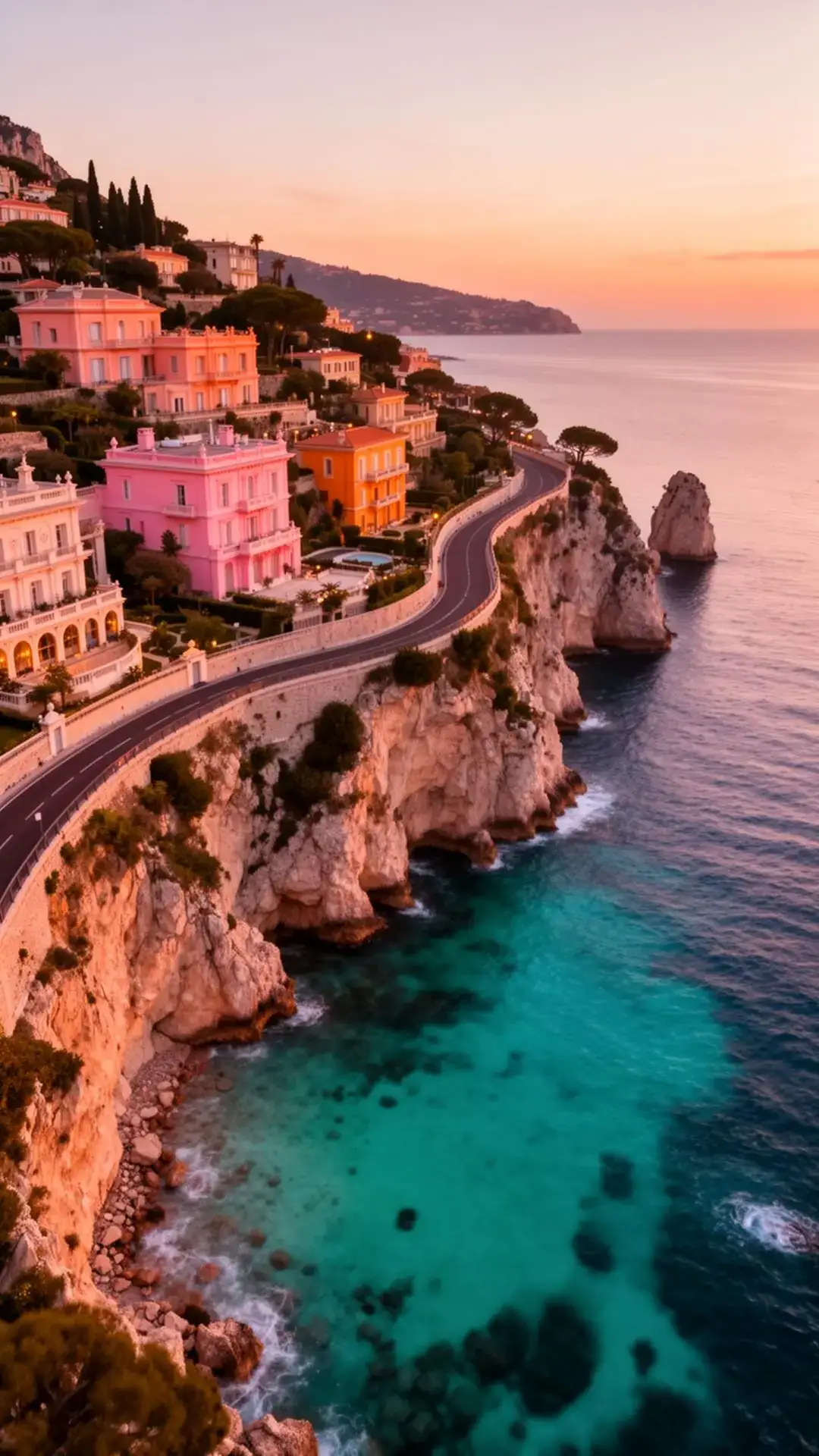
France · Côte d'Azur
The original Riviera — sun, sea and serious legacy investment.
The Côte d'Azur stretches roughly 120 km from Saint-Tropez east to the Italian border, anchored by Nice, Cannes, Antibes and Monaco. It is one of the most liquid, supply-constrained prime markets in Europe: planning is tightly controlled, the shoreline is largely built out, and demand from international buyers — French, British, Belgian, Dutch, Scandinavian, American and Middle Eastern — has been structurally rising for two decades. Prime sea-view villas in Cap d'Antibes, Cap Ferrat and the Saint-Tropez peninsula regularly clear €15M–€80M; well-located 2–3 bedroom apartments in central Nice or Cannes typically start around €700k–€1.2M.
Festivals, La Croisette, Belle Époque palaces. Strong year-round rental demand and the deepest super-prime apartment market.
International airport, MAMAC, Promenade des Anglais. Best value-for-money among the major Riviera cities and the most cosmopolitan day-to-day life.
Old town, Picasso museum, Port Vauban superyacht marina. The Cap is one of the world's top three trophy peninsulas.
July–August capital of the Mediterranean. Vineyard estates inland, sea-view villas on the peninsula (Ramatuelle, Gassin, La Croix-Valmer).
Family belt behind Cannes — international schools, golf, quiet stone villages, 20 minutes to the beach.
The most spectacular coastline between Nice and Monaco. Trophy assets and Monaco-border lifestyle.
La Croisette, the Festival and a year-round prime apartment market.
France's coastal capital — international airport, Belle Époque, best value among Riviera cities.
Port Vauban superyachts, Picasso old town, one of the world's top trophy peninsulas.
July–August capital of the Mediterranean — vineyards, beach clubs, supreme privacy.
300+ days of sunshine, a 90-minute drive from ski to sea, Michelin-star density second only to Paris, and a calendar of cultural events (Cannes Film Festival, Monaco Grand Prix, Nice Jazz, Antibes Yacht Show) that drives premium short-let demand from May through September. Daily life is walkable, café-led and family-friendly; Nice International Airport is the second-busiest in France with direct flights to 100+ destinations.
Mediterranean climate: dry, hot summers (26–30 °C), mild winters (8–14 °C), low humidity, 2,700+ sunshine hours per year. Sea temperature stays comfortable May to October.
Capital growth has averaged 4–6% p.a. across prime Riviera over the last decade with very low volatility — the market is dominated by all-cash international buyers and inherited family assets, which damps cycles. Short-let yields are 4–6% gross for well-positioned 2–3 bedroom apartments in Cannes and Nice; long-let yields 3–4%. French capital-gains tax on a second home tapers to zero after 22 years (income tax) / 30 years (social charges); non-residents pay a 19% headline rate plus social charges, with treaty relief widely available. Notary/transfer costs are 7–8% of purchase price.
Mougins School (British curriculum, K–13), International School of Nice (American), CIV Sophia Antipolis (French international), Lycée International de Valbonne. The Sophia Antipolis tech park draws a permanent international workforce that underwrites family-property demand.
CHU de Nice and Centre Antoine-Lacassagne (oncology) anchor the public system; Hôpital Princesse Grace in Monaco and a deep private clinic network (Saint-George, Mougins) serve international residents. France ranks consistently in the top 10 globally for health outcomes.
France
The step-by-step guide for non-resident buyers — notary, taxes, mortgages and what to expect from offer to keys.
Search
Where the entry-level sea-view villa market still works — and where it doesn't.
Buyer Guide
Energy ratings, transfer taxes, warranty, character premium and resale liquidity compared.
Family
A practical guide for families moving abroad — schools, healthcare, social networks and the first 12 months.
Local authority
Notes from years of walking these neighbourhoods — restaurants, schools, beaches and the quieter corners portals won't tell you about.
Eating & drinking· Mougins village
Pâtisserie Bruno is the one locals queue for at 7am on Saturdays.
Bruno Hamel's shop on Avenue Charles Mallet — opposite the Mougins School roundabout — is the genuine article: a viennoiserie counter that holds its own against anything in Cannes, a pain au chocolat with proper Valrhona lamination, and a tarte tropézienne that arrives still warm if you time it right. The locals' tell: the parking spots out front are taken by school-run Range Rovers, not tourists.
Beaches· Ramatuelle / Pampelonne
Plage de l'Escalet for swimming, Loulou for sunset, Indie Beach for Sunday lunch.
The Saint-Tropez peninsula is a study in beach-club hierarchy. For actual swimming and a clean cove, Plage de l'Escalet on the southern shore stays uncrowded into July. Loulou Ramatuelle has eclipsed the older clubs on Pampelonne for the sunset crowd — book the western-end loungers. Indie Beach further north remains the kindest option for a long Sunday lunch with children, with a parking lot that doesn't require a Vespa to escape.
Schools· Valbonne / Sophia Antipolis
CIV, Mougins School and ISN form one of Europe's densest English-language clusters.
The triangle of Valbonne–Mougins–Sophia Antipolis hosts four serious international schools within a 15-minute radius: Centre International de Valbonne (French international section, free), Mougins School (British, K–13, fee-paying), International School of Nice (American, MYP/DP), and the Bilingual Section of Lycée International de Sophia Antipolis. Waiting lists are real — start the application 12 months before the August intake, and budget €18,000–€25,000/year for the private options.
Culture· Antibes Old Town
The Picasso Museum on a Tuesday morning is the Riviera you came for.
Skip the July crowds: the Picasso Museum inside Château Grimaldi is half-empty on Tuesday and Thursday mornings, and the rooftop terrace overlooking the ramparts is the best free view in Antibes. Pair it with a coffee at Le Vauban behind the cathedral and a walk along the Sentier du Littoral — three hours of Cap d'Antibes coastline most short-term visitors never see.